8 years later: Hello Neighbor breaks CCU record, ships 100k units in a week on Steam. Why?
The direct result of a strategy we embarked on a decade ago.
It's been over 8 years since we launched Hello Neighbor on Steam (I'm getting old..). While the game has always had more traction on consoles and mobile, this is a huge milestone for us - and reaffirms our theory of unlocking value for game IP over a decade, and the strategy to get there.

First, here are some stats
Last December was the game's best December on Steam since launch, shipping over 60k units. This is due to a few things converging
Our modding community has exploded in Q4 2025 with several viral mods gaining traction on Youtube. There are currently over 2,200 mods on on the Workshop.
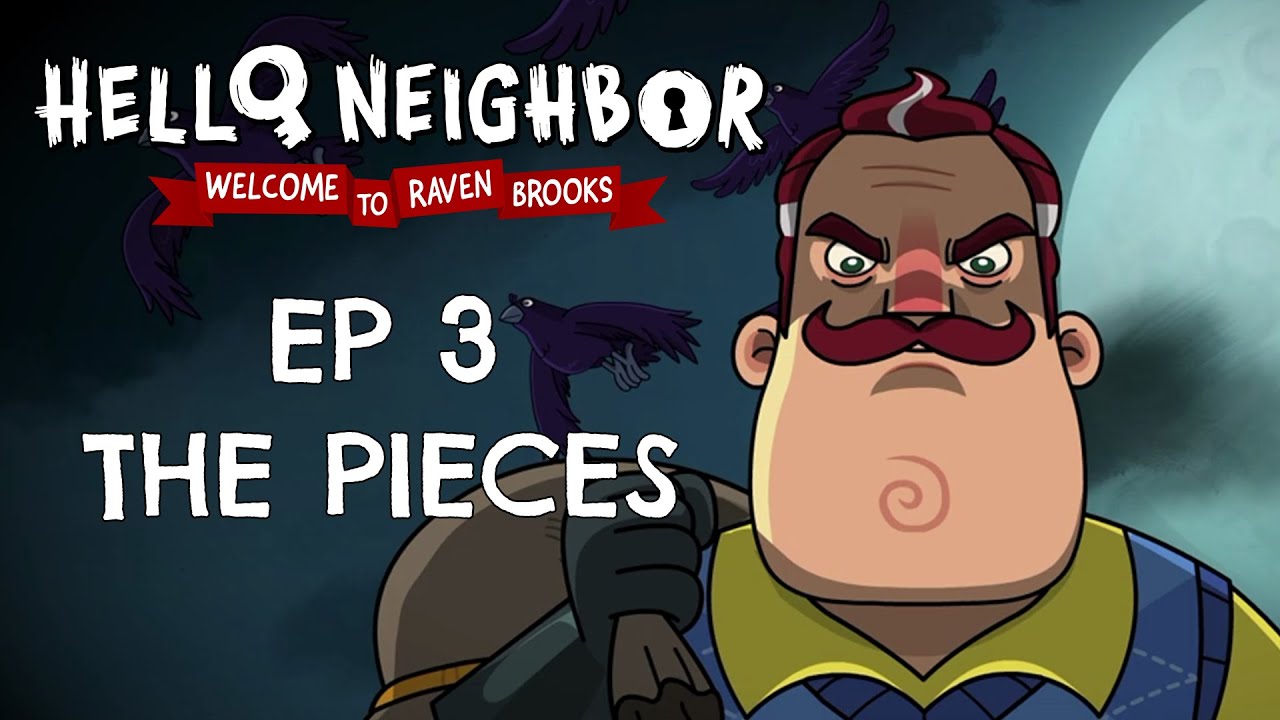
We've announced the new Neighbor design for Hello Neighbor 3
We are seeing continued interest in the franchise with millions of downloads per month on mobile, strong engagement on consoles, and continued interest for the Animated Series with the upcoming Season 3
The franchise itself has cumulatively had hundreds of millions of downloads on all platforms
This resulted in reignited interest for the game leading up to the Steam Winter Sale and during it, generating over 60k fresh wishlists in Q4 alone.

All of these factors combined resulted in a surge of wishlists on Steam for the original game, and now that it's at deep discount during the Spring Sale, we've reached a record high concurrent user count last weekend. It also shows a shift in user behavior: when the game launched 8 years ago, younger gamers were mostly on mobile and consoles. Today as Steam grew over the years, those gamers are also playing on PC.

What's important to understand is it's not "just a deep discount". We run deep discounts on older titles constantly, and it's rare they get such traction. This is because Wishlists themselves age. Before June 2025 we could track "cohorts" of wishlist conversions, and across our portfolio they showed clear aging: the closer a wishlist is to launch or a sale event, the more likely it was to convert into a sale. Note: this functionality is currently disabled but between 2017 and summer 2025 we have enough data to confidently state this.

There is a lot to unpack here. I've been saying for years that traditional indie publishing is dead. It's not a sustainable business model for devs nor publishers. In video games, value gets unlocked over years and often decades, whereas the traditional business model focuses on mostly new game IPs and short-term profits. When you have a hit on your hands - and it's usually a new video game IP - it's critical to build an infrastructure that supports longevity.
You don't need to go far to see the trends:
Stardew Valley released 10 years ago and is still one of most played games on Steam with updates coming out every month
PUBG just turned 9 years old and is still getting over half a million concurrent players every day (on Steam alone)
In 30 years, we've had 30 Resident Evil games (counting remakes) with the latest one becoming a record setter for the franchise
How many Mario games have you played?
It's counter intuitive: statistically it's easier to get from say $1m in revenue to $10m, than from $0 to $1m. And value can unlock over decades in a franchise. Resident Evil 9 was the best launch of the series, which had a lot of ups and downs over the past 30 years. This is why we're seeing so many reboots in Hollywood, and so many remasters of older video games. It's also why whenever you look at a digital storefront's top sales charts, there's always a few "ever green" hits there.
Snapshot of Steam in 2025:
Over 19k games launched
Of those 65% earned less than $1k in revenue (approx)
Of the total amount of games on the platform, 5,863 earned $100k+
And 2,395 games earned $500k+
The key here is it wasn't explicitly mentioned that these were new games launched, so the question is contribution of evergreen titles launched in the years prior per the gamediscovery newsletter
This context in mind, it's why with Hello Neighbor, we started investing into studios and doing spin-offs, sequels, merch. Just to give you an idea:

9 games in the franchise
The book series sold over 5 million copies
Just the board game based on Secret Neighbor, which is a multiplayer spin-off, sold half a million copies
The Animated Series had tens of millions of views across 2 seasons (so far)
The Mobile versions, which are monetized very lightly, have hundreds of millions of downloads
Everything reinforces everything else
None of this is possible in a traditional "I will publish your game" transactional type deal. It was possible because we took the deliberate choice to invest into the IP, and build a franchise blueprint. We're now seeing similar blueprints with the recent DLC launch of The King is Watching, just over half a year after the launch of the game. It sold over 500k units. Checkout this deep dive I did with GIbiz.
With our deals we seek for ways to have the original dev team continue to work on games they create. What has happened over the years though is we'd launch a super successful video game, and the creatives would want to work on something else afterwards. And this is absolutely reasonable. After several years of grueling development and finally a success on your hands, it's natural to want to do something new. The challenge here is in my previous statement: it's easier to get to $10m from $1m, than from $0 to $1m. Be that through continued updates and monetization of the original game, adding DLCs, sequels, prequels, spin-offs -- you name it. Momentum is key. It's easy to think you found a recipe for success launching a new game. Reality is the market changes so dynamically that what worked for you today may not work on the next game, and it's important to continue growing your original hit.
This is where Hello Neighbor comes in as an example. The original was incredibly successful, followed up by a prequel with the original creatives involved. Then we've had a sequel and several spin-offs, including the wildly popular Secret Neighbor multiplayer game -- during which the original creative Nikita took a step back, only to come back in full swing for Hello Neighbor 3. Check out his latest dev log:
Should the original dev team decide they need a break, we've built production infrastructure that facilitates that -- and can continue working on the game to make it into a franchise.
This structure is how I believe you can build something sustainable. It's OK to take a break from something you've worked on for years. It's OK to come back at a later stage. And when you think of it from the hypothesis of unlocking value over years, you need a structure that allows your hit to continue growing. This is a long winded answer as to why Hello Neighbor is peaking 8 years after launch.